Hyundai i20 Tenerife Driving Review
 Mia Andersen
7 min read
 Camila Fernández

Most guachinches sit up narrow farm lanes in Tacoronte, El Sauzal, Tegueste and the Orotava valley, about an hour from Costa Adeje on the TF-1 and TF-5. A small car picked up in Tacoronte handles the tight lanes and roadside parking, and lets you add the Casa del Vino in El Sauzal or the coast at Puerto de la Cruz to the same day. Agree on a driver who stays on water before you set off.
A guachinche is a wine grower’s room in the north of Tenerife: a garage, a cellar or part of the family house where the owners sell the wine from their own vineyards, with a few home-cooked dishes on the side. There is no long menu, no beer and no coffee, and the doors close when the barrels are empty. Most are in the wine towns between Tacoronte and the Orotava valley, and weekend lunch is the busiest time.
This guide covers what the Canarian rules say a guachinche is, the food, the season, where to find them, how a visit works and how to get there and back without drinking and driving. The season starts with the new wine, opened around San Andrés on 30 November; our guide to San Andrés in Tenerife covers that weekend’s fiestas.
In short
Guachinches grew out of an old habit: wine growers selling their wine straight from home, with something to eat alongside. As the name spread to all kinds of places, the Canary Islands government set rules in Decreto 83/2013 of 1 August, on “the temporary sale of own-harvest wine”. A 2019 Canarian law on food quality then made guachinches one of three official kinds of eating place, next to restaurants and bars, and told every other business to stop using the word.
| Rule | Guachinche (Decreto 83/2013) | Restaurant |
|---|---|---|
| Wine | Only from the owner’s own vineyards, made by the owner | Any wine |
| Other drinks | Water only | Any |
| Food | Up to three cooked dishes, plus pickles, nuts and fruit from the farm or the area | No limit |
| Season | Four months a year at most, closing when the wine runs out | All year |
| Premises | Part of the owner’s home, a cellar or a farm building | Licensed premises |
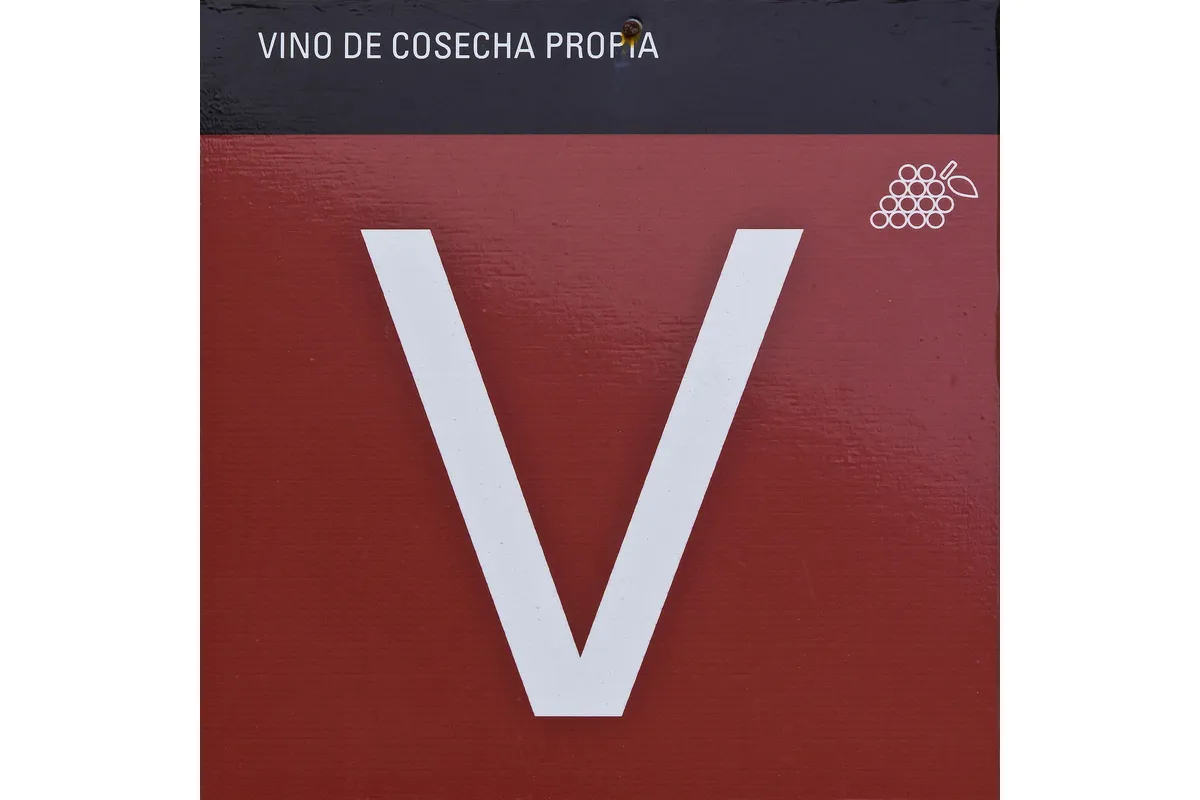
The plaque is the quickest test: a wine-red sign with a large white V, a small bunch of grapes and the words “Vino de cosecha propia”, own-harvest wine, beside the main entrance.
Many places with “guachinche” on the sign are not guachinches under the law. The local press has reported for years that restaurants, eating houses and bodegones use the word to draw customers. A long menu, beer on tap or bottled wine from other producers means you are in a restaurant, which may still be a good one.
The wine comes first: the family’s own red or white from the last harvest, served young. Because only three cooked dishes are allowed at a time, the choice is short and changes through the season, so ask what there is today. Dishes that come up again and again in local press reports include:
Cheese, pickles, nuts and local fruit fill the gaps. The only other drink is water: a guachinche that follows the rules has no soft drinks, juice, beer or coffee. By law the prices must be posted outside and inside, and you are billed according to that list.
The rules set no season, only a ceiling: a guachinche may open for no more than four months a year and must close as soon as its own wine is gone. Each one chooses its dates and posts its opening period, days and hours at the entrance.
In practice the calendar follows the wine. The new wine is opened around San Andrés at the end of November, and many guachinches open in the weeks around it. Last season a guachinche in La Corujera, Santa Úrsula, served until 31 May 2026, when its wine ran out, and planned to reopen in November with the new vintage. December to spring is the best time to find several open in the same area; a summer visit is a gamble.
Most guachinches are in the vine-growing hills of the north. The largest cluster is in the Tacoronte-Acentejo wine area, which in 1992 became the first wine denomination of origin in the Canary Islands. It takes in Tacoronte, El Sauzal, La Matanza, La Victoria, Santa Úrsula and Tegueste, among others. The Orotava valley, with La Orotava and Los Realejos, has its own denomination and its own guachinches. A few are in the Güímar valley and the south-west, but the north is where you find several close together.
| Area | Towns | Wine area | From Costa Adeje | From Puerto de la Cruz | From La Laguna |
|---|---|---|---|---|---|
| Tacoronte and El Sauzal | Tacoronte, El Sauzal | Tacoronte-Acentejo | About 1 h 05 | About 15 min | About 10 min |
| Acentejo | La Matanza, La Victoria, Santa Úrsula | Tacoronte-Acentejo | About 1 h 10 | About 10 min | About 15 min |
| Tegueste | Tegueste | Tacoronte-Acentejo | About 1 h 10 | About 30 min | About 15 min |
| Orotava valley | La Orotava, Los Realejos | Valle de la Orotava | About 1 h 05 | About 10 min | About 20–25 min |
Drive times are to each town center. From the south, Tacoronte and the Acentejo towns are reached on the TF-1 and TF-5 motorways; the Orotava valley is quicker via the west, on the TF-82 through Santiago del Teide.
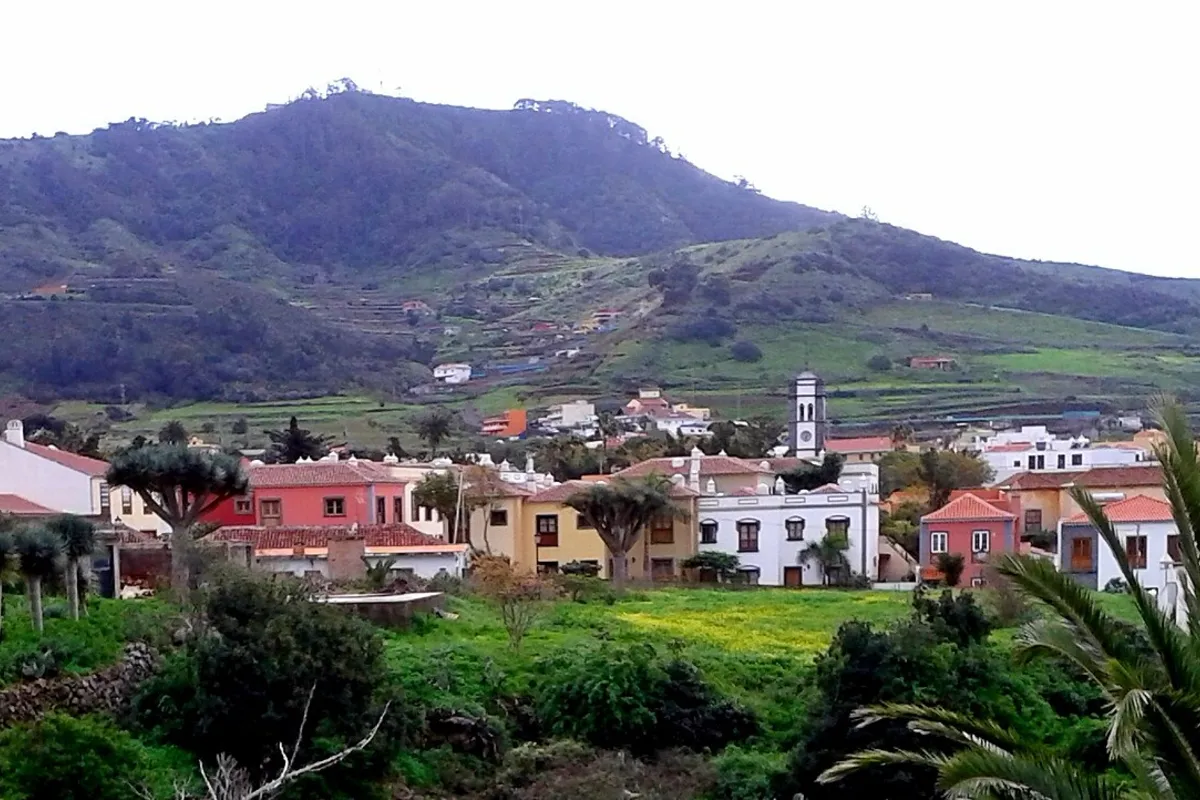
Guachinches open and close by season, so we do not list individual ones. Look for the plaque on the lanes around these towns, ask at your hotel or in a bar on the town square, and check recent reviews before you set off. If you are based in the north, you can also rent a car in Tacoronte and explore the area over several days. Our guide to north Tenerife by car covers the coast and towns nearby.
For a wider picture of Tenerife wine, the Casa del Vino is a 17th-century hacienda in El Sauzal owned by the Cabildo. It holds a wine museum, a honey visitor center, a tasting room with wines from across the island, a wine shop and a restaurant with views of Teide. It sits beside the TF-5 at the El Sauzal / La Baranda exit, about 5 minutes from Tacoronte, and has a large car park.
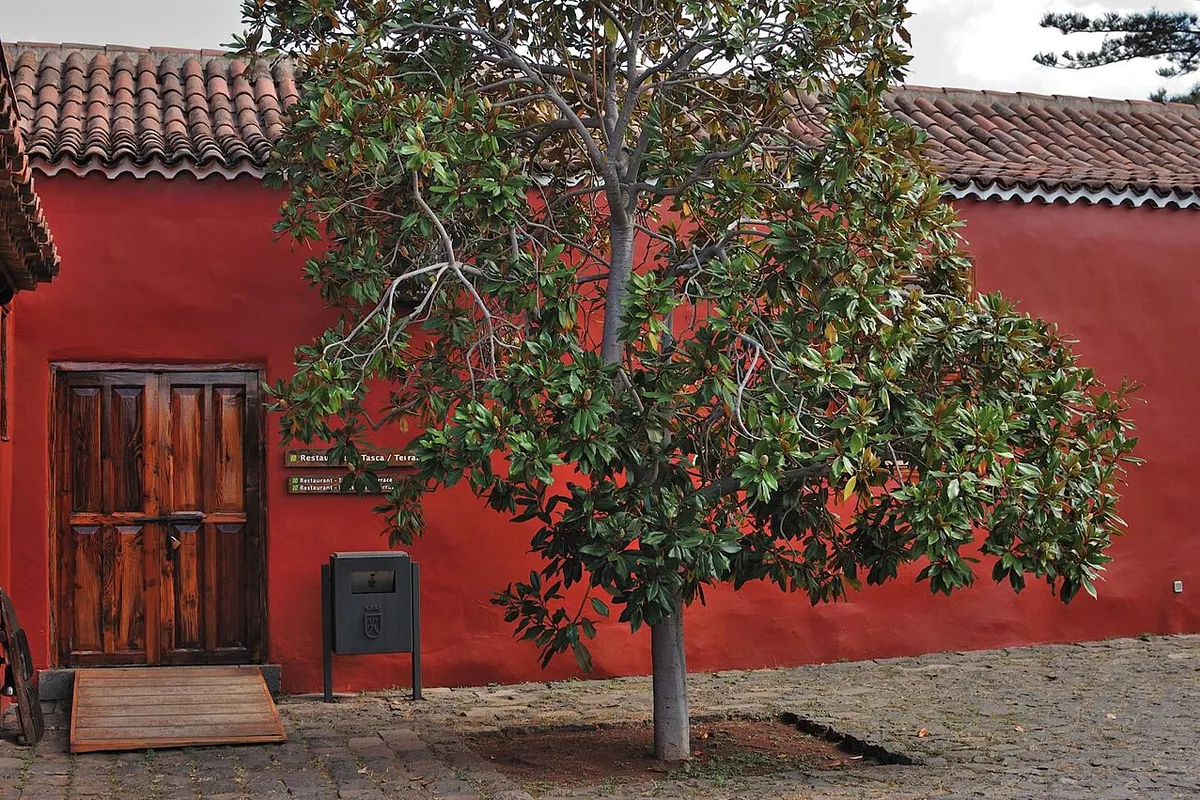
The shop, tasting room and museums are open Wednesday to Saturday from 10:00 to 20:00 and on Tuesdays, Sundays and holidays from 10:00 to 17:00, and closed on Mondays. Holiday hours change, so check its website before Christmas. Tastings can be booked online. It is not a guachinche, but it is a good first stop to learn what the north grows.
The rule for a guachinche day is simple: whoever drives does not drink. The limit in Spain is 0.5 g/l of blood alcohol, or 0.3 g/l for drivers who have held a license for less than two years, and police checks are common over the holidays. Even one glass of young wine with a heavy lunch is a bad idea before steep, unlit lanes. Choose a designated driver who sticks to water, or leave the car at your hotel and take a taxi or a TITSA bus.
Go at lunchtime, so the lanes are driven in daylight. For the rules of the road, see our guide to driving in Tenerife.
No. Under Decreto 83/2013 a guachinche sells only the owner’s own wine and water, serves at most three cooked dishes and opens for no more than four months a year. Places with long menus, beer or soft drinks are restaurants, whatever the sign says.
Each one sets its own dates, within the four-month limit and only while its wine lasts. Most open with the new wine from late November and close in spring, so December to April is the best time to go.
Some do, but many small ones have no card terminal, so bring cash.
Choose a designated driver who drinks only water, or leave the car at your hotel and take a taxi or a TITSA bus. Do not drive after drinking.
Cover photo: Listán Negro grapes on the vine in Tenerife. Photo: Pamela Heywood, CC BY 2.0, via Wikimedia Commons


 Mia Andersen

 Oliver Thompson


 Oliver Thompson
If the return time is later than the pickup time, 1 day will be added to the rental cost. Make pickup and return time the same.
 James O’Connor
 Sophie Dubois
 Carlos Ramirez
 Anna Müller