BMW M2 Competition Tenerife Review: Driving the Island
 Thomas Schneider
7 min read
 Isabella Rossi
Ready to rent a car in Tenerife?
Planning a trip to the Canary Islands in 2026 means figuring out what to expect from the skies. You might hear people call Tenerife the island of eternal spring. That statement holds a lot of truth, but the reality on the ground is far more complex. If you want to know exactly what to pack and when to book your flights, you need to understand Tenerife weather by month. The island boasts dozens of distinct microclimates. You can sunbathe on the golden sands of Los Cristianos in the morning and throw snowballs on Mount Teide by the afternoon. Having your own rental vehicle makes it incredibly easy to chase the sunshine across different coastlines.
Tenerife is physically divided by a massive volcanic peak. Mount Teide acts as a giant weather shield for the southern half of the island. The prevailing trade winds blow in from the northeast, hitting the northern slopes and dropping their moisture. This geographical quirk leaves the southern resorts dry and hot all year round. Northern towns like Puerto de la Cruz and Garachico stay incredibly green and slightly cooler as a result.
When you land at Tenerife South Airport (TFS), you will almost always step out into warm sunshine. The TF-1 motorway runs right along this dry southern coast, connecting the airport to major hubs like Costa Adeje. Drive just one hour north up the TF-5 towards the historic city of La Laguna, and the temperature gauge on your dashboard will likely drop by five or six degrees. You will often see thick clouds gathering against the jagged peaks of the Anaga mountains. This drastic difference dictates exactly how you should plan your itinerary and your wardrobe.
Winter remains the peak tourist season for visitors escaping freezing temperatures in northern Europe. In December, January and February, the southern resorts of Costa Adeje and Playa de las Americas average daytime highs of 20-22 degrees Celsius. The evenings dip to around 14-15 degrees, requiring a light jacket when dining outdoors. Rainfall in the south is exceptionally rare, even in January.
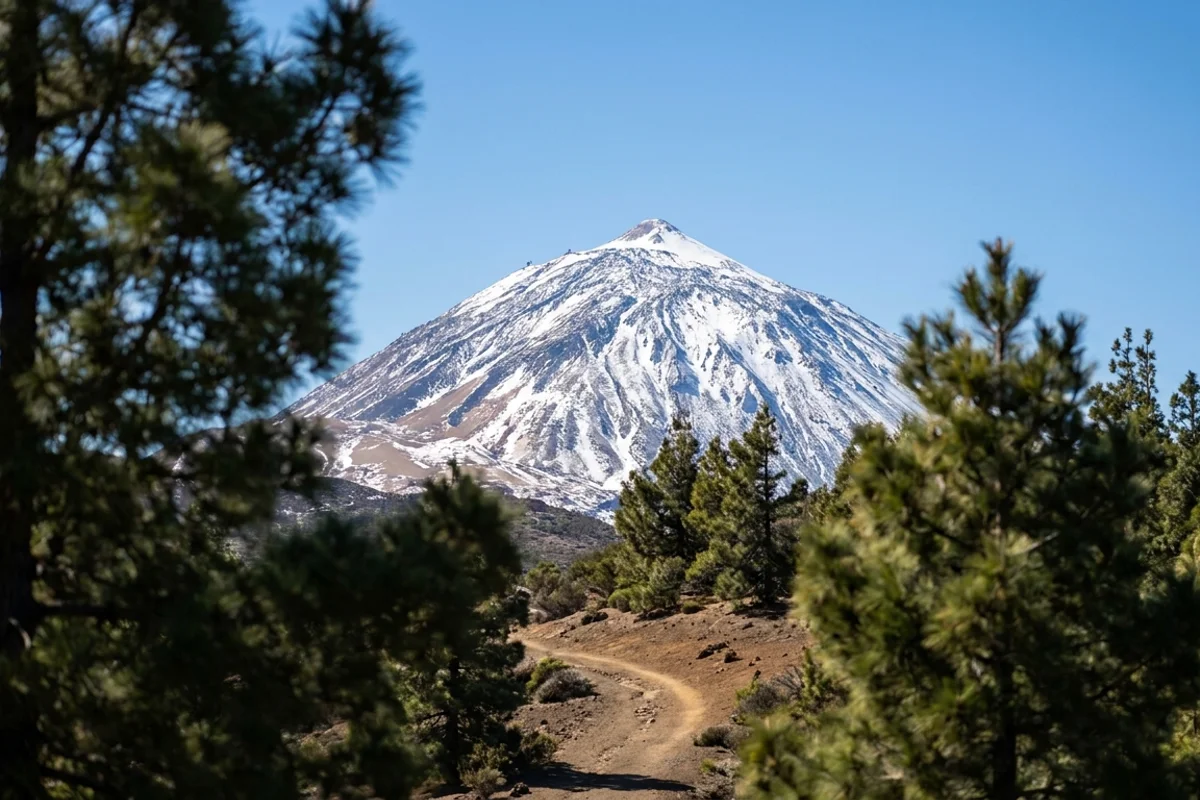
Up north, the story changes. The capital city of Santa Cruz sees daytime highs of 18-19 degrees and occasional heavy rain showers. The real surprise for many tourists is Mount Teide. Above 2,000 metres, temperatures regularly drop below freezing during the winter months. You will often see the volcanic peak capped with thick snow in January and February. Driving up the winding TF-24 through the Esperanza pine forest offers incredible views of the snow against the dark volcanic rock.
Packing for a winter trip requires sensible layers. Bring your swimsuit and flip-flops for the southern beaches. Pack jeans, long-sleeved shirts, and a decent fleece or windbreaker for the cooler evenings. If you plan to drive up the TF-21 to the Teide cable car station, you must bring a warm winter coat, gloves, and sturdy closed-toe shoes. For winter transport, standard hatchbacks are perfectly fine for cruising the coast. If you are heading into the steep mountain villages, you might prefer upgrading to an SUV with a bit more engine power for the inclines.
March signals the start of the spring shoulder season. The massive winter crowds begin to thin out, and hotel prices drop slightly. Daytime temperatures in the south slowly creep up to 23-24 degrees. By May, you are looking at solid beach weather with highs around 25 degrees and virtually no rain anywhere on the island. The sea temperature is still a bit brisk in March, hovering around 19 degrees, but it warms up nicely by late May.
The northern valleys burst into colour during these spring months. The Orotava Valley gets covered in native wildflowers. Driving through the Teno Rural Park is spectacular in April because the visibility is crystal clear and the hillsides are lush from the winter showers. Traffic is generally light, except during the busy Easter week when locals head to the beaches and mountains en masse.
Your packing list should shift heavily towards lighter clothing. T-shirts, shorts, and summer dresses are perfect for daytime exploring. Keep a light jumper in your luggage for the evenings or if you take a sunset dolphin-watching boat trip out of Los Gigantes harbour. Spring is arguably the best time to rent a fun, sporty vehicle. With dry roads and comfortable air temperatures, an open-top drive along the coastal TF-47 road is a brilliant experience. You can browse our range of premium and convertible cars to make the most of the spring sunshine.
Summer brings serious heat to the Canary Islands. June, July, and August see daytime temperatures in the south consistently hitting 28-30 degrees. During a calima, a specific weather phenomenon where hot winds blow fine sand over from the Sahara desert, temperatures can spike above 35-38 degrees for a few days. The air gets hazy, and the best place to be is floating in the ocean or sitting in an air-conditioned room.
The north is slightly more forgiving during the peak of summer. Puerto de la Cruz averages 24-25 degrees in August, offering a very pleasant escape from the intense southern sun. Locals refer to the panza de burro, which translates to donkey’s belly. This is a thick sea of clouds that sometimes settles over the northern coast in early summer, blocking the direct sun and keeping the towns comfortably cool.
Pack as light as possible for a summer visit. Breathable fabrics like linen and cotton are absolutely essential. Bring plenty of swimwear, a wide-brimmed hat, sunglasses, and high-factor sunscreen. You will not need a jacket unless you plan a late-night stargazing trip high up in the Teide National Park. When arriving in the intense summer heat, you really do not want to wait in long bus queues outside the terminal. Organise your car rental at Tenerife South Airport well in advance. You can step off the plane, grab your keys, and get the air conditioning running immediately.
September and October are widely considered the best months to visit Tenerife. The Atlantic Ocean has spent the entire summer warming up and sits at a wonderfully balmy 23-24 degrees. Daytime temperatures on land stay high, averaging 26-27 degrees in the south. The massive summer crowds have gone back to school and work, leaving the beaches much quieter.
November is when the weather finally starts to transition towards winter. The first proper winter swells arrive on the rugged north coast, bringing dedicated surfers to beaches like Bajamar and Punta del Hidalgo. Rain becomes more likely in the northern municipalities, though the south generally remains dry and sunny right through to December.
For autumn packing, you can still rely mostly on your summer clothes for September and October. By November, you should reintroduce a light rain jacket and a couple of warmer layers for the evenings. This autumn season is absolutely ideal for hiking in the Anaga Rural Park. The cooler November air makes tackling the steep, winding trails much more comfortable than in the sweltering peak of August.
To help you budget for your 2026 holiday, here is a rough guide to weekly car hire prices in Tenerife. Rates naturally fluctuate based on demand and how early you book. This table provides a realistic benchmark for a seven-day rental with basic insurance coverage.
| Season | Economy (e.g. VW Polo) | Compact SUV (e.g. Seat Arona) | Convertible (e.g. Mini Cabrio) | Average South Temp |
|---|---|---|---|---|
| Winter (Dec-Feb) | 160-190 euros | 210-250 euros | 350-400 euros | 21 degrees Celsius |
| Spring (Mar-May) | 130-150 euros | 180-210 euros | 300-340 euros | 23 degrees Celsius |
| Summer (Jun-Aug) | 180-220 euros | 240-280 euros | 400-450 euros | 29 degrees Celsius |
| Autumn (Sep-Nov) | 140-160 euros | 190-220 euros | 320-360 euros | 26 degrees Celsius |
Understanding the weather is only half the battle when planning a road trip. You also need to know how the climate affects the local roads. Tenerife’s main infrastructure is generally excellent. The TF-1 motorway wraps around the south and east coasts, while the TF-5 covers the busy northern corridor. Both are wide, well-maintained, and very easy to navigate in any weather condition. Petrol prices for 2026 remain cheaper than mainland Europe, averaging around 1.15-1.25 euros per litre.
The mountain roads present a totally different driving experience. The TF-436 winding down into the remote village of Masca is famous for its extreme hairpin bends and steep drops. In dry summer weather, it is a thrilling drive for confident motorists. If it rains heavily in winter, the tarmac gets slick, and minor rockfalls are a genuine risk. Always check local weather advisories before heading into the deep ravines.
Mount Teide is accessible via four main mountain routes. The TF-21 from Vilaflor in the south is the most popular path for tourists. During a severe January snowstorm, the local police will close the access barriers for safety. They usually clear the roads quickly, but you should always check the Tenerife Cabildo’s official road status website before setting off. Having a reliable, well-maintained vehicle makes all the difference on these steep gradients. This is exactly why sorting out your car hire in Tenerife with a trusted, established provider is so crucial for a stress-free trip.
December generally sees the most rainfall, particularly in the northern part of the island around La Laguna and Anaga. The southern tourist resorts like Los Cristianos and Costa Adeje still receive very little rain, even in the middle of winter.
No, a standard front-wheel-drive car is perfectly fine for 99 percent of the island’s road network. The main motorways and mountain routes like the TF-21 to Teide are fully paved. An SUV just offers a higher driving position and a bit more comfort on longer journeys.
A calima usually lasts for three to five days. The air becomes very dusty, visibility drops significantly, and temperatures soar. It happens a few times a year, mostly in July and August. You should avoid strenuous hikes during a severe calima and drink plenty of bottled water.
The Atlantic Ocean around Tenerife drops to about 19 degrees Celsius in February and March. Many tourists from colder climates find this perfectly fine for a quick dip. Local residents tend to stick to heated hotel pools until late spring.
Rental cars in the Canary Islands are fitted with standard summer tyres all year round. If heavy snow falls on Mount Teide, the authorities simply close the roads until the snowploughs clear the tarmac completely. You do not need winter tyres or snow chains for a holiday here.
The trade winds are a constant feature of the Canary Islands. The town of El Medano on the southeast coast is particularly famous for high winds, making it a hotspot for kitesurfing. The resorts on the southwest coast are much more sheltered from these breezes.
Tenerife offers fantastic weather all year round. You just need to pick the right side of the island for your preferred climate and pack accordingly. Secure your vehicle early to lock in the best 2026 rates. Head over to our Tenerife South Airport page to check current availability and start planning your perfect island road trip today.
Planning your Tenerife trip?


 James O’Connor
 Isabella Rossi


 Oliver Thompson
 Camila Fernández
If the return time is later than the pickup time, 1 day will be added to the rental cost. Make pickup and return time the same.
 Luca Bianchi