Mercedes-Benz V-Class Driving Review in Tenerife
 Mia Andersen
7 min read
Mia Andersen
Ready to rent a car in Tenerife?
Most visitors come to the Canary Islands for the beaches and the year-round sunshine. A completely different world waits 2,000 metres above sea level. Driving up Mount Teide at night is an experience that drastically changes how you see the island. The air grows cold, the coastal noise disappears, and the sky opens up in a way that is impossible to witness near the resorts. To do this properly, you need the freedom of your own vehicle. Taking a crowded tour bus means standing exactly where fifty other people are standing, restricted to a strict timetable. Organising a reliable car rental Tenerife gives you the flexibility to chase the clearest skies, escape the tour groups, and find a quiet volcanic plain all to yourself.
The island is uniquely positioned for astronomy. Because the Canary Islands sit relatively close to the equator, observers can see all the constellations of the northern hemisphere and a massive portion of the southern ones. Teide National Park is heavily protected by law. It holds official certification as a Starlight Reserve, meaning the local government strictly controls light pollution. Streetlights in the surrounding mountain villages use low-intensity orange bulbs designed to direct light downwards.
The altitude is the real secret to stargazing tenerife. At over 2,000 metres above sea level, the national park sits above the thermal inversion layer. The local trade winds push the clouds down, creating a thick, fluffy blanket below the mountain peaks. This natural barrier physically blocks out the artificial light from the coastal towns like Playa de las Americas and Los Cristianos. When you drive up through the fog and finally break out above the clouds, you are greeted by a pitch-black sky. The air at this altitude is also incredibly dry and thin, which stops the stars from twinkling excessively and provides a crisp, steady view of the cosmos.
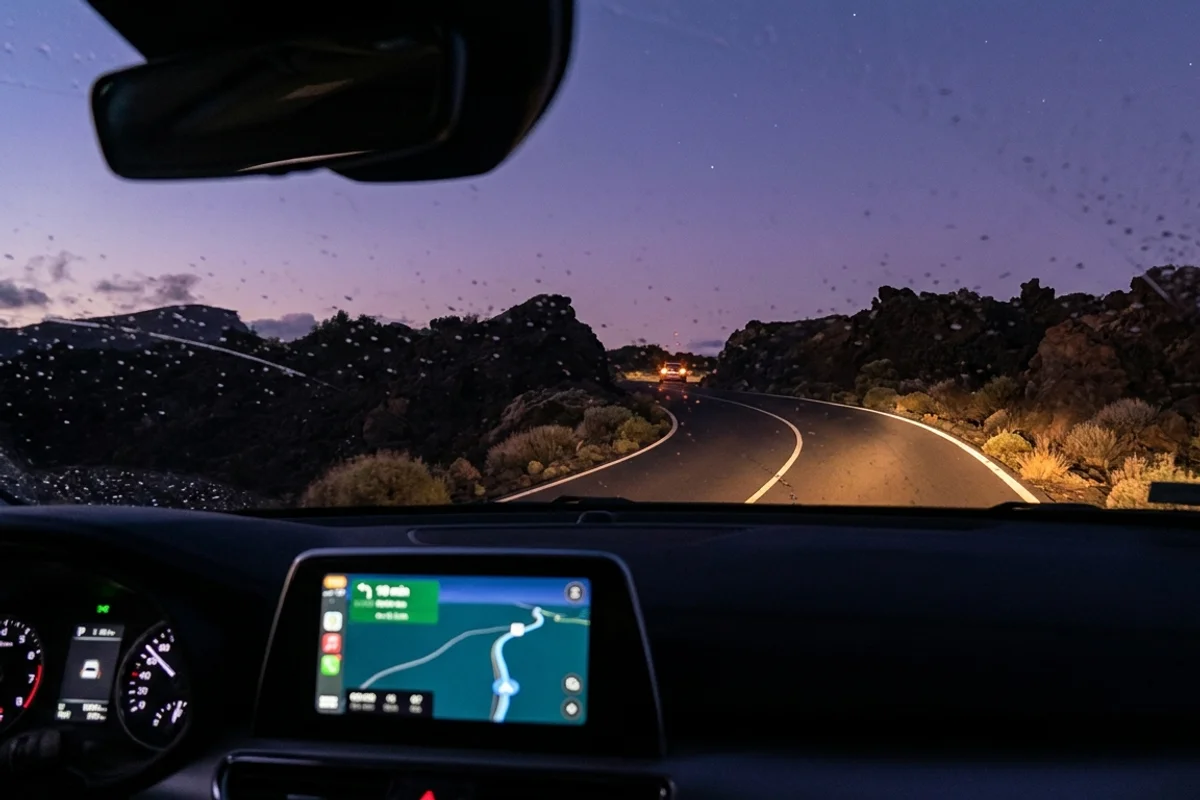
Depending on the time of year you visit, the sky offers different spectacles. Summer is widely considered the best time to see the Milky Way core. From June to September, the brightest, most densely packed part of our galaxy stretches directly across the sky like a glowing band of dust. August also brings the Perseids meteor shower. During its peak, you can easily spot 50 to 100 shooting stars an hour from the dark plains of the national park.
Winter offers brilliant views of Orion, Taurus, and the Pleiades star cluster. The Geminids meteor shower in December is often even more spectacular than the Perseids, provided you can handle the freezing temperatures at the summit. You do not need a telescope to enjoy the view. A pair of standard binoculars will let you see the craters on the moon and the moons of Jupiter. On nights with a new moon, the sky is so dark that the sheer volume of visible stars can actually make it difficult to pick out familiar constellations.
When you land and head to the Tenerife South Airport desks, you want a straightforward pickup process. The drive up to Teide involves long, continuous climbs and dozens of hairpin bends. You need a car with a dependable engine, good headlights, and a strong heater. The mountain gets bitterly cold at night, and having a warm cabin to retreat into is essential.
A standard compact car with a manual transmission is perfectly fine for the paved mountain roads, provided you are comfortable using lower gears for engine braking on the way down. Many drivers prefer booking an automatic transmission for this specific journey. An automatic removes the stress of shifting gears on steep, dark inclines, allowing you to focus entirely on the road. If you are travelling as a group, an SUV offers a higher driving position which helps with visibility around sharp corners.
For a truly memorable trip, consider upgrading to luxury car rental. Renting a premium vehicle with a panoramic glass roof or a convertible changes the entire experience. You can park in a designated lay-by, lean your leather seats all the way back, and watch the Milky Way without even stepping out into the cold mountain air.
Tenerife has a central volcanic peak, meaning you can drive up to the national park from almost any direction. The TF-1 motorway circles the southern and eastern coasts, while the TF-5 covers the north. Eventually, you will need to turn inland and start the long climb.
If you are staying in Costa Adeje, Los Cristianos, or Las Americas, this is your most direct route. You will head up through Arona and the town of Vilaflor, which is the highest municipality in Spain. The road from Vilaflor into the national park is heavily forested with Canarian pines. It is a winding, twisting route that requires intense concentration in the dark. Watch out for pine needles on the tarmac, which can be slippery if it has recently rained. The drive takes about an hour from the coast to the park boundary.
This route starts near the town of Chío. It is widely considered the easiest and safest drive in the dark. The TF-38 is wider, straighter, and has a gentler incline than the other mountain roads. It cuts through massive, dramatic black lava fields from the 1798 eruption. Because there are fewer trees on this side of the mountain, you get unobstructed views of the sky much earlier in your journey. This is the recommended route if you are staying in Los Gigantes, Callao Salvaje, or if you simply dislike tight hairpin bends.
Starting from La Orotava or Puerto de la Cruz, this route takes you through the lush northern valleys. It is a beautiful drive during the day but can be challenging at night. The north side of the island catches the trade winds, meaning you will almost certainly have to drive through a dense band of fog known locally as the “panza de burro” (donkey’s belly). Visibility can drop to just a few metres. You must take it slow, use your fog lights, and follow the road markings. Once you hit about 1,500 metres in altitude, you will suddenly break through the cloud layer into perfectly clear, dry air.
Here is a breakdown of the main approaches to help you plan your evening.
| Starting Area | Primary Road | Est. Drive Time | Road Characteristics at Night |
|---|---|---|---|
| Costa Adeje / Los Cristianos | TF-51 to TF-21 | 60-75 mins | Very winding, heavily forested, frequent hairpin bends. |
| Los Gigantes / Chío | TF-38 | 45-60 mins | Wider, straighter, open lava fields, excellent early visibility. |
| Puerto de la Cruz / La Orotava | TF-21 (North) | 70-85 mins | Steep, high chance of dense fog on the lower sections. |
| Santa Cruz / La Laguna | TF-24 | 80-95 mins | Long forested ridge drive, spectacular views over the clouds. |
Once you are inside the national park, the speed limit drops and the road flattens out as you enter the main caldera. There are dozens of official viewpoints, known as “miradores”, where you can safely pull your car hire Tenerife off the road.
This is one of the largest and most popular parking areas in the park. It sits on the edge of a vast, flat plain of volcanic sediment. The open space provides a massive, unobstructed view of the southern sky. It is completely flat, making it easy to park and set up a tripod safely in the dark.
Located near the Parador hotel, this viewpoint looks out over the iconic rock formations that feature on many Tenerife postcards. The jagged rocks make for incredible foreground silhouettes in night photography. Because it is near the only hotel in the park, there is a tiny amount of ambient light, but it is still dark enough to see the Milky Way clearly.
Further along the TF-21 towards the north, you will find the Minas de San José. This area is covered in pale pumice stone and looks exactly like the surface of Mars. Under a full moon, the pale ground reflects the light so brightly that you can walk around without a torch. For serious stargazing tenerife trips, you want to visit this spot during a new moon when the pumice plains disappear into the blackness.
Heading up a 2,000-metre volcano at midnight requires a bit of planning. You cannot treat it like a drive to a coastal restaurant.
Warm clothing is non-negotiable. Tourists regularly arrive at the viewpoints wearing shorts and flip-flops, only to retreat to their cars after three minutes. Temperatures at the summit regularly drop to zero degrees Celsius in winter, with frost and occasional snow. Even in the middle of August, night temperatures in the caldera hover around 8 to 12 degrees. Pack a heavy winter coat, a beanie, thick socks, and gloves.
Bring a red light torch. White light ruins your night vision, and it takes your eyes about twenty minutes to fully adjust to the dark again. If you use a standard white torch or look at your bright phone screen, you will miss the fainter stars. You can buy cheap headtorches with a red light setting, or simply put some red cellophane over your phone’s flashlight.
Fuel up before you leave the coast. There are no petrol stations inside Teide National Park. The last places to buy petrol are in the mountain towns like Vilaflor or Chío, and these rural stations often close early in the evening. Ensure you have at least a half tank of fuel before you start climbing.
Download offline maps. Mobile phone reception is generally good across Tenerife, but there are several dead zones inside the volcanic crater. Downloading the island’s map to your phone ensures you can always find your way back to your accommodation.
Budgeting for this trip is relatively straightforward, as the main expenses are simply your vehicle and fuel. Access to Teide National Park is completely free, and there are no toll roads on the island.
In 2026, petrol prices in Tenerife remain cheaper than mainland Europe due to lower local taxes. Expect to pay around 1.30 to 1.45 euros per litre for Unleaded 95. A round trip from Costa Adeje to the national park and back covers about 100 kilometres. Depending on your vehicle’s engine, this will use roughly 8 to 12 litres of fuel, costing you less than 20 euros in petrol.
Car rental prices fluctuate based on the season. During the peak winter months of January and February, a standard compact car will cost between 35 and 45 euros per day. In the quieter shoulder seasons like May or October, prices can drop closer to 25 euros a day. Upgrading to an SUV or a convertible will typically cost between 60 and 90 euros daily, depending on how far in advance you secure the booking.
No, you do not need a four-wheel-drive vehicle. All the main access roads (TF-21, TF-24, and TF-38) are fully paved, wide, and well-maintained by the local government. A standard economy car is perfectly capable of making the climb. You only need to stay on the tarmac and use the designated asphalt or gravel parking areas.
Yes, driving at night is safe. The roads have clear reflective lines and sturdy crash barriers on the steep drops. However, there are no streetlights outside the villages. You must drive cautiously, use your high beams when there is no oncoming traffic, and watch out for small rocks on the road or wild rabbits darting across the tarmac.
The best approach is to arrive about an hour before sunset. This allows you to drive the winding mountain roads while it is still light out. You can watch the spectacular sunset above the sea of clouds, then find a good parking spot and let your eyes adjust as the sky slowly turns black.
No, sleeping in vehicles, camping, and parking motorhomes overnight outside of designated campsites is strictly prohibited in Teide National Park. Park rangers patrol the area regularly. You are welcome to stay as late as you like to observe the stars, but you must eventually drive back down to your accommodation.
No. The visitor centres, the cable car station, and the cafes all close by late afternoon. The only building open is the Parador hotel, which is reserved for paying guests. You must bring all your own food, water, and warm clothing. There are no public toilets open in the park after dark.
A night spent under the stars on Mount Teide is a highlight of any trip to the Canary Islands. The key to a stress-free evening is securing the right vehicle for the mountain roads. To organise your transport and guarantee a comfortable drive to the summit, pick up your keys directly at the Tenerife South Airport desks with CARZRENT and start your astronomical adventure the moment you land.


 James O’Connor
 Luca Bianchi
 Carlos Ramirez

 James O’Connor
If the return time is later than the pickup time, 1 day will be added to the rental cost. Make pickup and return time the same.
 Sophie Dubois
 Thomas Schneider